Accounts Receivable Outsourcing Gains Momentum as Businesses Prioritize Cash Flow Stability
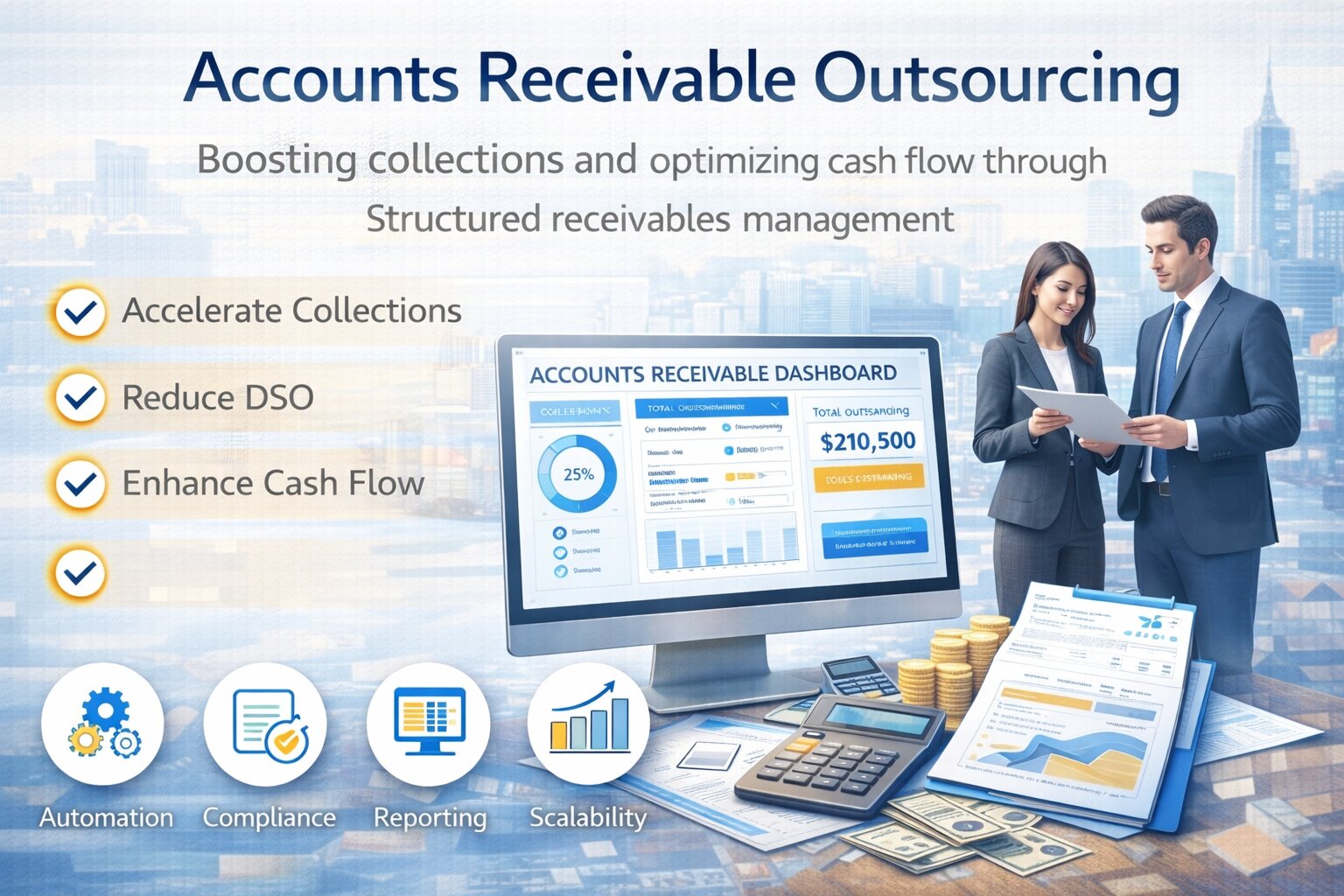
In response to tightening credit environments and extended payment cycles, businesses across multiple sectors are accelerating the adoption of Accounts Receivable Outsourcing solutions. Industry experts report a noticeable shift as finance leaders move toward specialized receivables management models designed to improve liquidity, reduce operational bottlenecks, and enhance financial transparency.
As global markets continue to evolve, maintaining consistent cash flow has become a critical priority. Consequently, companies are reassessing traditional in-house receivables processes and turning to outsourced frameworks that combine automation, structured follow-ups, and performance analytics.
Addressing Delayed Payments and Rising DSO
Extended payment terms and inconsistent collection practices have contributed to increased Days Sales Outstanding (DSO) across many industries. Over time, these delays create pressure on working capital and limit growth opportunities.
Through Accounts Receivable Outsourcing, organizations gain access to standardized invoicing procedures, proactive payment tracking, and structured dispute resolution mechanisms. As a result, collections become more predictable and revenue cycles shorten.
Financial analysts indicate that companies leveraging outsourced receivables management often report measurable improvements in payment turnaround times and customer communication consistency.
Enhancing Operational Efficiency Through Technology
Digital transformation continues to reshape finance operations. Automated invoicing platforms, real-time dashboards, and AI-driven payment tracking tools are now central to modern receivables workflows.
By integrating technology into outsourced receivables frameworks, businesses achieve improved accuracy and greater visibility into outstanding balances. Furthermore, automation reduces administrative burden, enabling internal finance teams to focus on strategic planning and financial forecasting.
Industry observers note that the integration of analytics within Accounts Receivable Outsourcing models provides enhanced reporting capabilities and more informed decision-making.
Strengthening Customer Relationships
While accelerating collections remains a key objective, maintaining positive customer relationships is equally important. Structured communication strategies embedded within outsourced receivables processes ensure that follow-ups remain professional, timely, and transparent.
Consequently, organizations can improve cash flow without compromising long-term client trust. In many cases, clearer invoicing and consistent communication significantly reduce disputes and payment misunderstandings.
Supporting Scalability and Compliance
As businesses expand into new markets, receivables complexity often increases. Multiple currencies, regulatory variations, and diverse customer profiles require disciplined oversight.
Accounts Receivable Outsourcing frameworks provide scalable solutions that adapt to transaction growth while maintaining compliance standards. In addition, comprehensive audit trails support regulatory requirements and internal governance policies.
This scalability enables companies to grow confidently without proportionally increasing internal administrative resources.
Market Outlook
Industry projections suggest continued growth in the adoption of outsourced receivables solutions. As economic conditions remain dynamic, liquidity resilience and operational agility are expected to remain top priorities for executive teams.
Moreover, advancements in artificial intelligence and predictive analytics are anticipated to further enhance receivables performance by identifying high-risk accounts before payment delays occur.
Conclusion
As financial pressures and operational complexity intensify, Accounts Receivable Outsourcing is emerging as a strategic solution for organizations seeking improved cash flow control and greater operational efficiency. By combining technology, structured processes, and scalable frameworks, businesses are redefining receivables management as a driver of financial stability and sustainable growth.
Categories: Allgemein
No Responses Yet
You must be logged in to post a comment.